

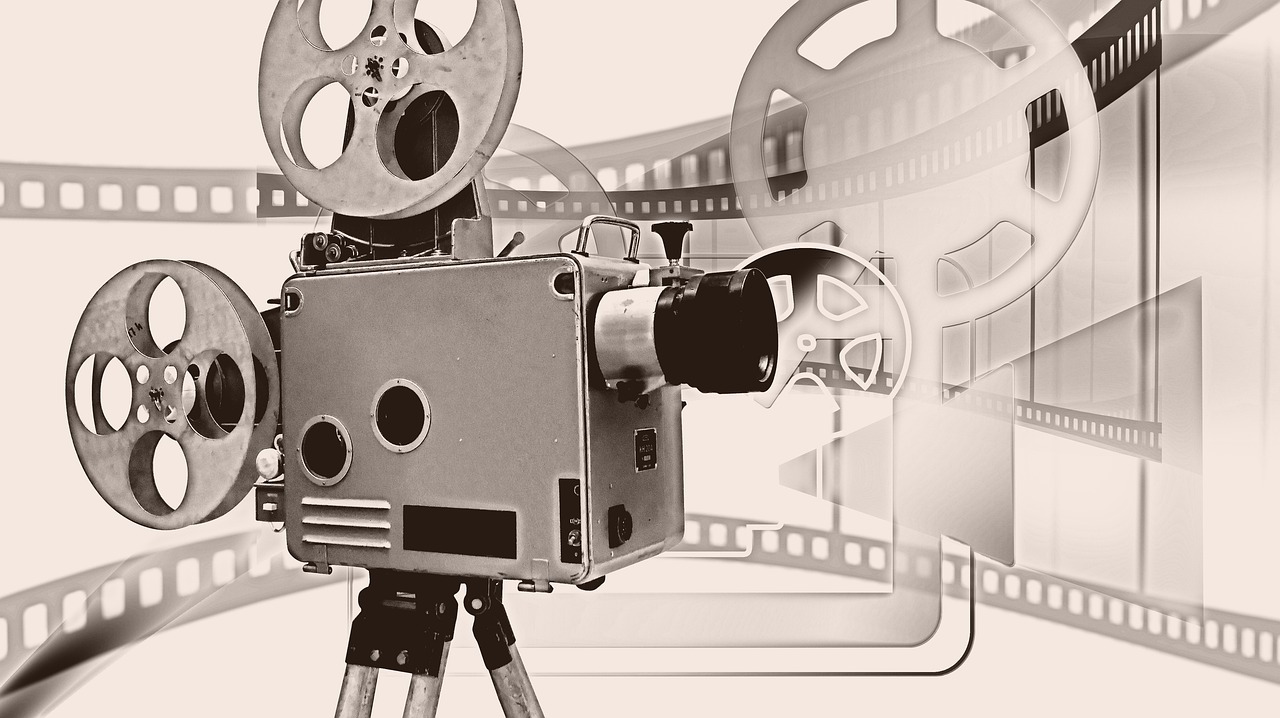
By 2015, nearly every cinema screen on Earth had switched from 35mm to digital projection, while a handful of directors were lobbying IMAX to strike 70mm prints. At the same time, critics publish “Best Films” lists as streaming apps invite you to “Watch Movie.” The words feel interchangeable until you notice how they steer expectations, budgets, and even the kind of ticket you buy.
If you want the short version: in everyday speech, “film” and “movie” are largely synonyms. The practical difference between film and movie shows up in connotation (art vs entertainment), medium (celluloid vs digital), and industry pathways (festival circuit vs wide-release multiplex). Below is a precise map of where those differences matter and where they don’t.
What The Words Signal
Historically, “film” named the physical medium celluloid strips carrying images at 24 frames per second. “Movie” emerged in American vernacular around the 1910s as a contraction of “moving picture.” Today, both terms describe the same finished work; the divergence is cultural: critics, academics, and the UK default to “film,” while U.S. marketing and casual conversation lean “movie.”
Contexts underline the split. The Academy gives “Best Picture,” not “Best Movie,” and film festivals, film schools, and film studies persist even when no celluloid is involved. Meanwhile, mass-market brands adopt “movie”: MoviePass, MTV Movie & TV Awards, and most streaming menus labeled “Movies.” The word you choose signals your stance analysis and artistry vs entertainment and consumption more than it signals a different object.
Regional usage reinforces this. In the UK and much of the Commonwealth, “film” is the default everyday term. In the U.S., “movie” is the default casual term. Neither community misunderstands the other; the nuance is tonal. If you tell a British colleague you saw a “film,” you sound neutral; in Los Angeles, leading with “a film” can imply a work that aims above standard commercial fare.
Medium And Craft: Celluloid, Digital, And Style
On the literal medium, the difference used to be technical. 35mm negative offers roughly 13–14 stops of dynamic range and an effective resolving power often compared to around 4K when scanned carefully, with grain as a visible texture. Modern digital cinema cameras (notably ARRI ALEXA models) deliver comparable or greater dynamic range, excellent low-light performance, and less costly workflows. As of the mid-2010s, the vast majority of productions capture and project digitally; celluloid persists by choice, not necessity.
Exhibition has converged even more strongly. Within a few years after 2010, digital projection displaced 35mm at multiplexes, while specialty houses maintained 35mm/70mm capability for retrospectives and select new releases. IMAX 65/70mm and 70mm panoramic formats still matter for directors prioritizing ultra-high resolution, large negative size, and a distinctive texture. Those choices correlate with “film” branding in publicity, but they do not define the content’s ambition.
National Association of Theatre Owners: By the mid‑2010s, virtually all commercial screens had converted to digital projection, making celluloid a curated rather than default format.
Stylistic tendencies correlate with word choice, though exceptions abound. Commercial “movies” often prioritize plot momentum, shorter shot lengths, and clear genre codes. Contemporary wide-release action titles frequently use average shot lengths under 4 seconds, while many art-house “films” sit above 6–10 seconds, emphasizing composition, silence, and ambiguity. This is a tendency, not a rule: a comic-book adaptation can include long-take choreography, and a festival winner can cut rapidly.
How They’re Financed And Released
Follow the money and the difference gets operational. A “movie” in industry shorthand typically means a wide-release commercial product targeting thousands of U.S. screens and global grosses. Budgets cluster accordingly: micro-budgets under $250,000; low-budget independent features often $1–5 million; mid-budget dramas $10–30 million; tentpoles $100–250+ million. Marketing (prints and advertising, or P&A) can match or exceed production. A $30 million mid-budget release might carry $20–40 million in domestic P&A; a summer tentpole may spend $100 million+ worldwide on marketing.
Independent “film” financing stacks multiple layers: tax incentives (often 20–40% qualifying spend), presales to distributors in key territories, equity from private investors, and sometimes grants. Because debt and presales depend on recoupment logic, package risk is managed via recognizable cast, festival prospects, or prestigious attachments (e.g., a known director). The same finished work might be called a “film” on the festival route and a “movie” once a streamer picks it up for mass audiences.
Release windows have reshaped expectations. The traditional ~90-day theatrical exclusivity collapsed during 2020–2021. Today, a typical wide release hits premium video-on-demand or streaming in about 31–45 days if box office momentum slows. Some agreements permit even faster pivots for titles with modest debuts.
AMC–Universal pact (2020): Allowed premium VOD after as little as 17 days for certain titles, formally breaking the old 90‑day window for a subset of releases.
Release patterns signal intent. “Movies” often open wide (2,000–4,500 U.S. screens) with nationwide marketing. “Films” frequently platform: 4–20 screens at launch, expanding if the per-theater average is strong. Practical thresholds vary with season and competition, but a platform PTA above $20,000 in opening frames can trigger expansion; wide releases commonly target PTAs in the $3,000–$8,000 range to sustain multi-week plays. Festivals act as the bridge: Sundance, Cannes, Venice, and Toronto can vault a low-budget film into distribution. Acceptance rates at top festivals are low around 1–3% of feature submissions so the path is risky but high-leverage.
Audience Promise: Expectations, Metrics, And Trade-Offs
To an audience, the words prime a promise. “Movie night” suggests a two-hour, story-forward experience that moves briskly and resolves clearly; “film” suggests you may encounter ambiguity, slower pacing, or formal experimentation. This expectation affects satisfaction metrics: CinemaScore sampling at multiplexes rewards clear genre delivery (an A–F grade assigned opening night by ticket buyers), while longer-tail esteem shows up in critics’ polls and retrospectives. The same title can score modestly with opening-night crowds yet accumulate awards and syllabus placements.
Risk and return differ by model. A $5 million horror “movie” with clever marketing can gross $50–150 million worldwide; examples abound in the past decade, and the economics work because P&A can be concentrated and genre audiences mobilize quickly. Conversely, a $20 million period “film” may rely on festivals, awards chatter, and slow-burn word of mouth; global gross might land below production cost, but ancillary value (streaming library prestige, awards, catalog longevity) can justify the investment. Evidence is mixed on whether awards boost lifetime revenue substantially; uplift is real for select titles, but not universal.
Streaming complicates the ledger. A “movie” engineered for subscriber acquisition may skip theaters entirely; the KPI becomes incremental sign-ups and retention, not box office. In that context, the platform may still market it as a “film” to confer cultural capital. Meanwhile, theatrical-first “films” often convert to premium VOD faster than a decade ago, trading some exclusivity for broader reach. These are business levers, not artistic verdicts.
Where The Terms Converge and Why It Matters Less Than You Think
Because the core grammar of long-form audiovisual storytelling is shared actors, cinematography, editing, sound the same work can be fairly called a film or a movie. The terms mostly encode stance: Are we emphasizing craft lineage (film language, film history) or market function (moviegoing, opening weekend)? Connotation shapes coverage; it doesn’t rewrite the content.
Yet the labels do have practical consequences. A grant application for an experimental feature using “film” signals alignment with arts funding bodies. A studio memo about a four-quadrant “movie” tells departments to plan broad marketing, accessible tone, and franchise potential. Viewers also self-select: people scanning for “movies” expect pace and payoff; those hunting for “films” may tolerate risk subtitles, open endings, unfamiliar structures.
When disagreements arise online about the “difference between film and movie,” they’re often really about values: should long-form screen storytelling aim first to entertain or to explore? Most durable works manage both, and many commercial hits embed formal ambition (consider inventive sound design, color science, or narrative structure) that critics later celebrate as “filmic.”
Conclusion
Use a simple decision rule. If you’re discussing medium or craft lineage, or positioning a work within artistic traditions and festivals, “film” communicates well. If you’re talking about commerce tickets, franchises, opening weekends “movie” keeps expectations clear. For creators, pick your label to match your path: festival-first, tax-incentivized finance and platform release (likely “film”), or wide-release marketing and fast PVOD turn (likely “movie”). For viewers, ignore the label and scan the signals that matter: runtime, rating, genre, release pattern, and who’s backing it.